
· by Michael Blair, Nashville's Weed and Feed
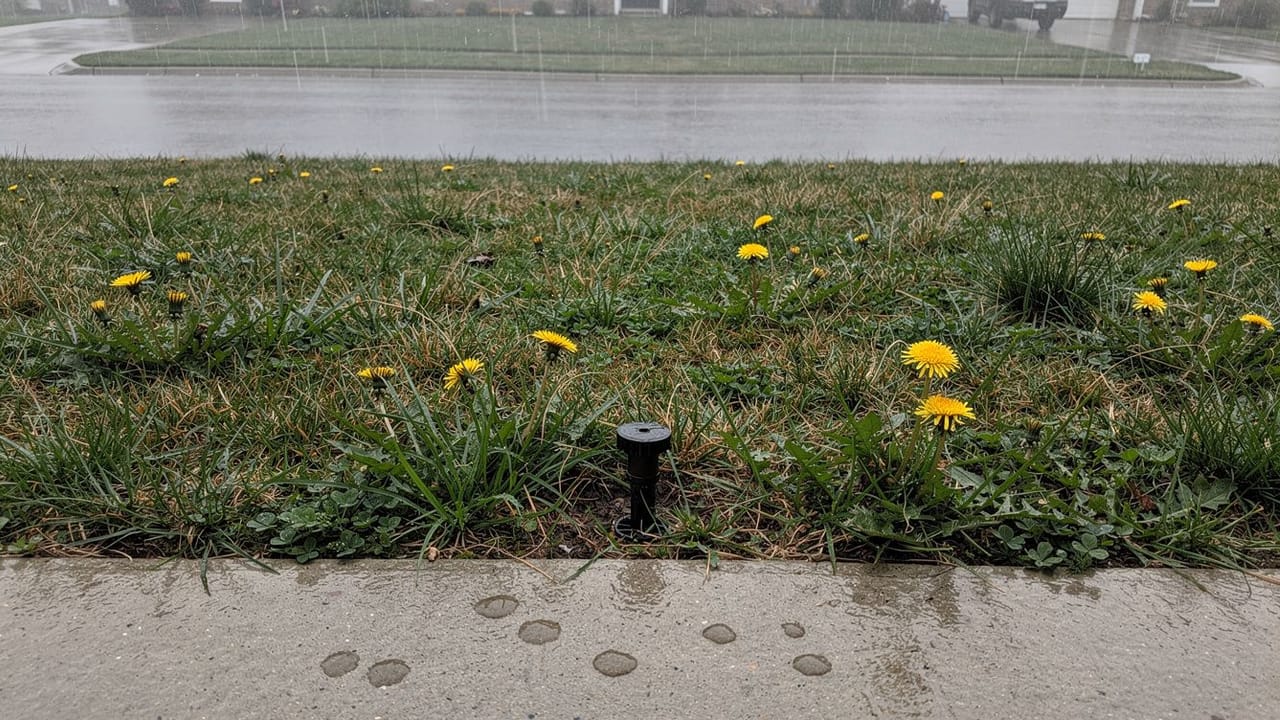
Most of the worry after a lawn is treated is about timing. A storm rolls in an hour after the truck leaves, the sprinklers are set to run that night, the grass needs cutting by the weekend, and the dog wants out. Whether any of that matters depends on which kind of product went down, because water is what one kind of weed killer needs and what the other kind cannot have. This is how we time water, mowing and pets around a weed control application in Mt. Juliet, Hendersonville and the rest of our area, and where the final word sits.
Does rain ruin a weed killer application?
It can, if the product was sprayed on weeds that are already up and the rain arrives before the spray has been taken in. The University of Tennessee’s Lawn and Landscape Weed Control for Homeowners (W1068) says rainfall or irrigation right after a post-emergent herbicide can keep it from being absorbed into the leaf tissue. The same guide explains why that matters: systemic herbicides work by being absorbed and then carried to the plant’s growing points, and UT notes that many selective products are systemic. A spray that runs off the leaf before it soaks in never makes that trip.
How long is long enough is a number on the product label, not a general rule. UT’s guide gives no hour count, and one lawn herbicide label filed with the EPA, registration 2217-991, shows why: its rainproof line is written with the hours left blank to be filled in per product, and its directions say to spray when rain is not expected for the next 24 hours. So when a storm comes through the same afternoon, we look at what was applied and its label before deciding whether a spot needs another pass.
Should you water after weed killer or not?
Not after a spray on visible weeds, and yes after a pre-emergent. The two products want opposite things from water. For the spray, the label filed with the EPA says that if the lawn is dry, water it 24 hours before the application, and not to water the lawn within 24 hours after. UT says post-emergent products work best on young weeds that are actively growing, and the dry day afterward leaves the leaf alone to take the product in.
A pre-emergent application works in the soil, not on a leaf, so it has to get there. UT’s W1068 says pre-emergent herbicides must be watered into the soil, by irrigation or rainfall, within 24 to 48 hours of application, and that the label says how much water to use. If no rain comes in that window, running the sprinklers is part of the job. When to put the pre-emergent down in the first place is a separate question, covered in our post on pre-emergent timing in Nashville.
When can the mower go back out after weed killer?
Give the spray a couple of days on either side. The label on file with the EPA tells users to delay mowing 2 days before and 2 days after applying it. Our reading of why: mowing just before a spray cuts off the leaf surface that would have taken the product in, and mowing right after removes treated leaf before a systemic product has moved through the plant. Other products may carry different intervals, and the one on the label is the one to follow.
The first mow after the wait is also a chance to keep from planting next year’s weeds. UT’s guide suggests collecting clippings when the lawn is full of weeds that are flowering and setting seed, so the seed does not go back onto the soil. If weeds you thought were treated are back a few weeks later, the reasons are usually something other than the weather, and our post on why weeds come back after weed killer goes through them.
Pets, children and the label
The label decides when the lawn is open again. The EPA’s introduction to pesticide labels notes that every pesticide label carries the statement that using the product in a way inconsistent with its labeling violates federal law, which is why the agency calls the label the law. The rain, mowing and re-entry numbers on it are not suggestions.
On the one label we have cited here, the rule is to keep people and pets out of the area during the application and not to let them back in until the spray has dried. Other products can say more. The practical step is to know the name of the product on your lawn so you can read its label yourself, and to ask whoever applied it. If you want us to look at your lawn and tell you what we would use and how to time it around your watering and mowing, send us a note.
Sources
- University of Tennessee Extension, Lawn and Landscape Weed Control for Homeowners (W1068) — Rain or irrigation after a post-emergent herbicide can prevent absorption; systemic herbicides move to growing points; pre-emergent must be watered in within 24 to 48 hours; collect clippings from seeding weeds
- US EPA Pesticide Product Label System, registration 2217-991 (label dated July 22, 2024) — One lawn herbicide label: no entry until sprays have dried, delay mowing 2 days before and after, water a dry lawn 24 hours before, do not water within 24 hours after, apply when rain is not predicted for 24 hours
- US EPA, Introduction to Pesticide Labels — Labels are legally enforceable; use inconsistent with the labeling violates federal law
FAQ
Rain, Sprinklers and Mowing After a Weed Killer Spray — questions
How long after spraying weed killer should I wait to mow?
Follow the product label. One lawn herbicide label filed with the EPA says to delay mowing 2 days before and 2 days after the application. A systemic spray needs time to be absorbed and move through the weed, and mowing too soon removes the leaf that is carrying it.
Does rain wash away weed killer on a lawn?
It can. University of Tennessee Extension says rain or irrigation right after a post-emergent herbicide can keep it from being absorbed into the leaf. The label gives the dry time the product needs. Pre-emergent is the exception: it needs rain or watering within 24 to 48 hours to reach the soil.
Should I water the lawn after spraying weed killer?
Not right away after a spray on visible weeds. One label on file with the EPA says to water a dry lawn 24 hours before the application and not within 24 hours after. A granular or sprayed pre-emergent is different, and UT Extension says it must be watered in within 24 to 48 hours.
How long should dogs stay off the lawn after weed killer?
At least until the spray has dried, and longer if the product’s label sets a longer re-entry time. The label we cite here says to keep people and pets out during the application and off the area until the spray has dried. The EPA treats the label’s directions as legally binding.
Should I mow before I spray weed killer?
Not the same day. The label on file with the EPA that we cite says to delay mowing for 2 days before the application as well as after it. The weeds need leaf surface to take in a systemic spray, and a freshly cut weed has less leaf to take it in.