
· by Michael Blair, Nashville's Weed and Feed
Lime raises soil pH. Grass, fescue in particular, takes up nutrients best in a slightly acidic to neutral soil, and in soil that has drifted too acidic, fertilizer is applied and largely wasted because the roots cannot use it. Middle Tennessee sits on limestone, which pushes many soils toward neutral already, and the honest answer to whether a given lawn needs lime is that nobody knows until the soil is tested.
What pH does to a lawn
Nutrient availability depends on pH. In acidic soil, phosphorus locks up, aluminum and manganese become more available to the point of being toxic to roots, and the bacteria that break down thatch and release nitrogen slow down. The grass looks pale and thin no matter how much it is fed, weeds that tolerate acid soil move in, and moss appears in the shade.
In soil that is too alkaline, iron and manganese become unavailable and the grass yellows between the veins, a chlorosis that looks like nitrogen deficiency and does not respond to nitrogen. Applying lime to that lawn makes it worse. Both problems produce a lawn that seems to ignore fertilizer.
Why Middle Tennessee is not one answer
The bedrock is limestone, and soils that formed from it tend toward neutral. But the topsoil on a subdivision lot was often stripped and replaced, the fill can be anything, and years of acid-forming fertilizer, rainfall and leaf litter push the surface layer acidic over time. A lawn on a lot that was woodland, or under mature oaks, is often acidic; a lawn on shallow soil over rock is often not.
That is why the neighbor liming every fall tells you nothing about your lawn. Two lots on the same street can need opposite treatment, and the only way to know is a soil test.
- Soil test from a lab, not a probe meter, every two or three years
- Target pH for fescue: slightly acidic to neutral
- Lime only if the test says so, in the amount it says
- Retest before repeating
Testing, and reading the result
A soil test through the university extension service or a private lab costs little and returns pH, buffer pH, and the major nutrients, with a recommendation for lime and fertilizer specific to the lawn. Take cores from several spots across the lawn, mix them, and send the composite. Cheap pH probes and color kits are not accurate enough to decide an application on.
The recommendation will be a quantity of lime per thousand square feet, and it may be more than one application can safely deliver, because lime is spread in limited amounts per pass. It moves slowly through soil, so the effect takes months and a lawn limed in fall shows the change in the spring after.
Applying it, if it is needed
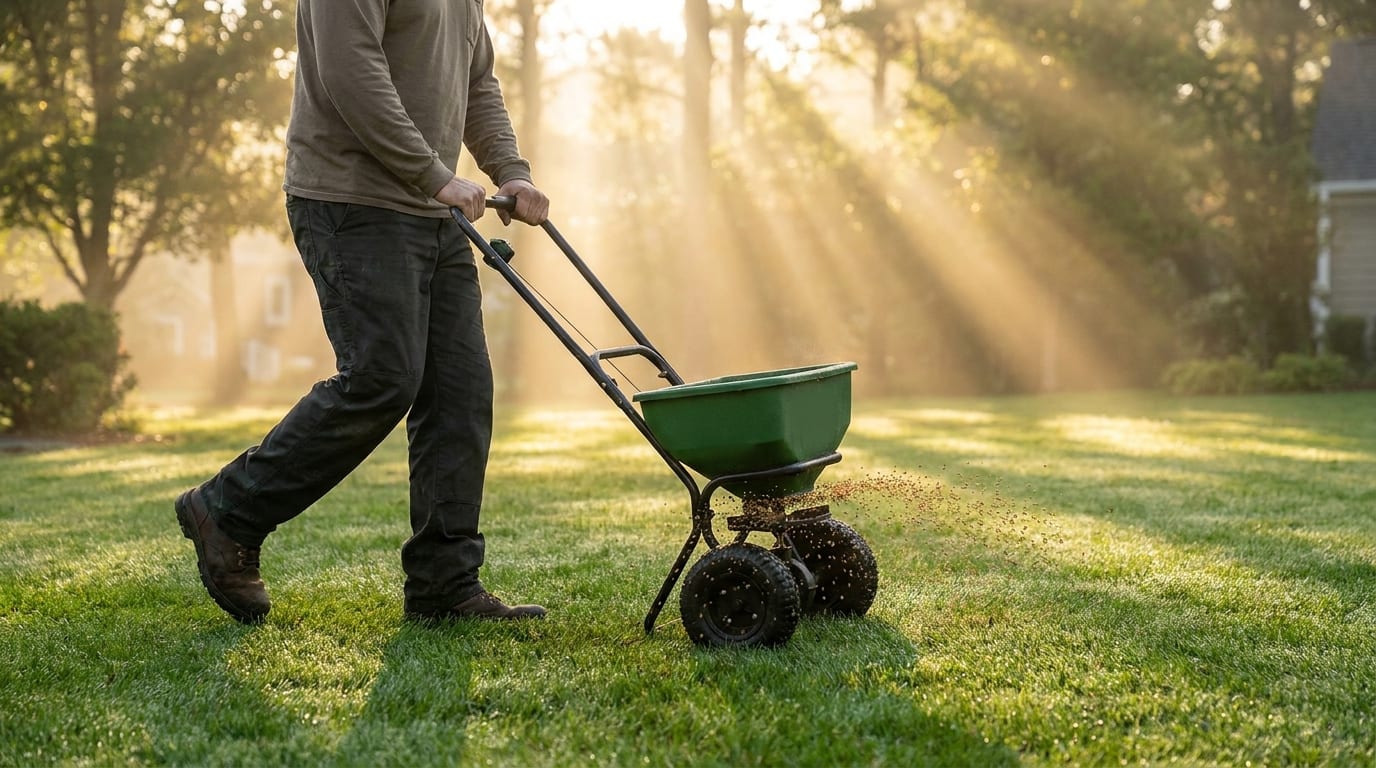
Pelletized lime is the practical choice for a home lawn; it spreads through a rotary spreader without dust and dissolves with rain. Fall is the usual timing here because the winter rains carry it down and the soil is ready by spring. Apply it separately from fertilizer, a few weeks apart, and after aeration if the lawn is being aerated, because the holes take it down faster.
If the test shows the lawn does not need it, the money goes on what it does need, which is usually organic matter and nitrogen at the right time of year. A lawn that has been limed for years without a test is worth testing before the next bag, because a pH that has been pushed too high is harder to bring back down than a low one is to raise.